
What Is Mag-Tech
The shorter version:
Mag-Tech uses magnetic forces to replace springs in mechanisms.
The longer version:
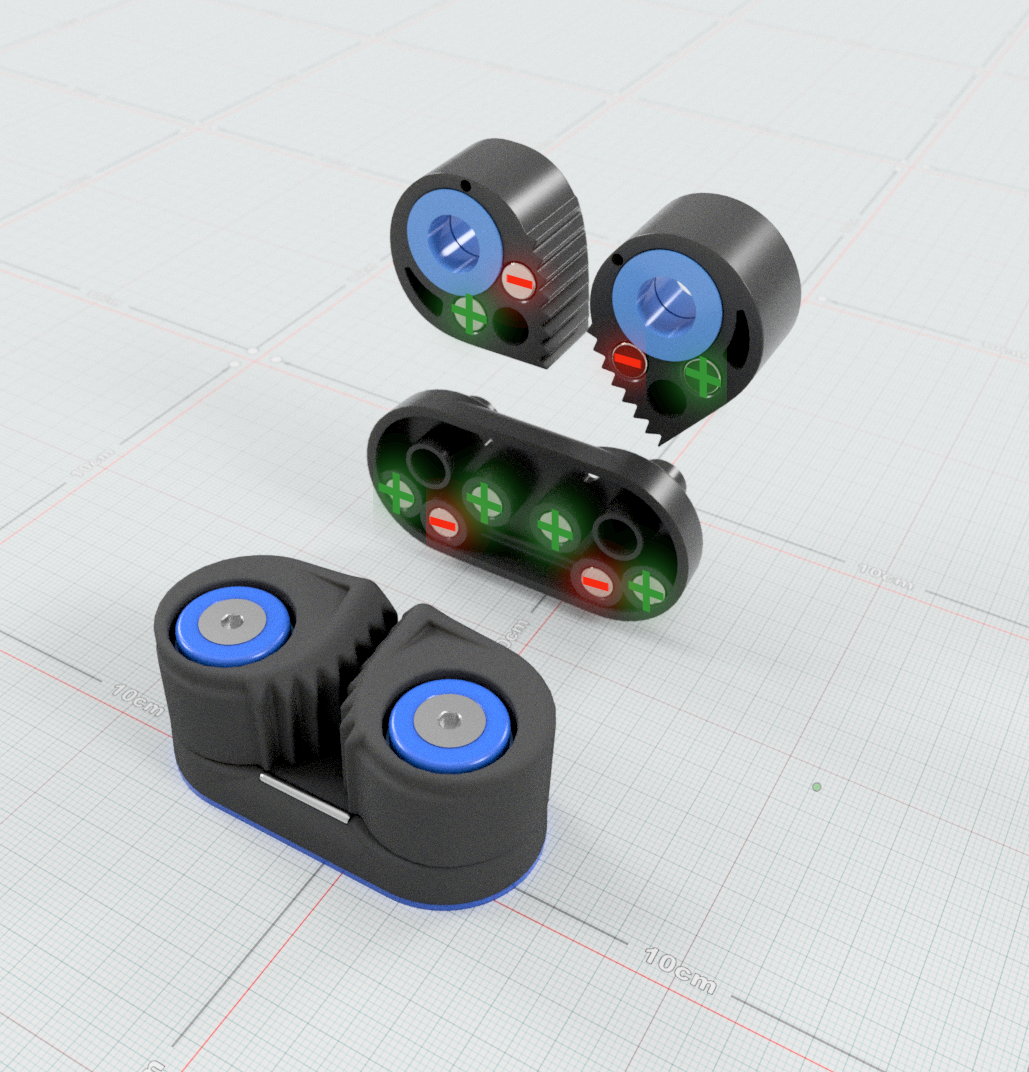
Mag-Tech is a new approach to cam and pawl mechanisms that replaces traditional springs with carefully engineered magnetic forces. In conventional systems such as cam cleats, rope clutches, and ratcheting mechanisms, springs provide the force that drives engagement, but they are also a common source of corrosion, fatigue, and mechanical failure. Mag-Tech uses permanent magnets to generate this engagement force without relying on springs, allowing the mechanism to operate with fewer failure points and improved durability. By carefully controlling magnet geometry, spacing, and orientation, the system can be tuned to deliver precise engagement forces and consistent performance.
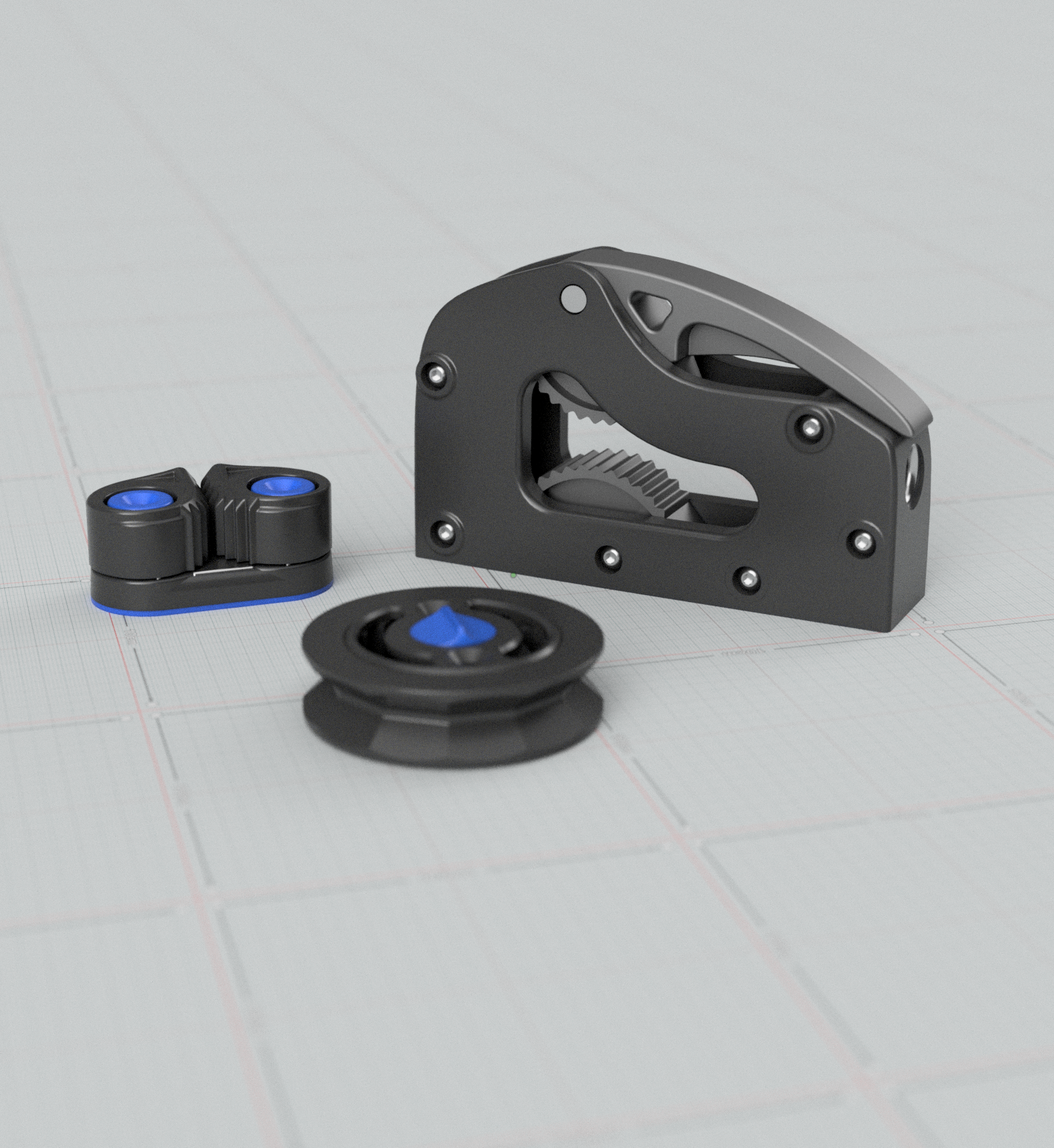
-
Springs often struggle in harsh environments like saltwater, dirt, or heavy use. They can corrode, fatigue, or break after repeated cycles. Because Mag-Tech uses magnetic force instead of a bending spring, there is less risk of fatigue and fewer parts that can rust or weaken over time. This makes the system especially well suited for marine and industrial environments where reliability is critical.
-
Mag-Tech can also simplify how mechanisms work internally. Magnetic force can transfer motion between parts without needing additional springs or linkages. In some designs, this allows multiple components to move together through magnetic interaction rather than through separate mechanical parts. Fewer moving parts means less wear, simpler construction, and potentially longer service life.
-
Item descriptionSprings can change over time — they can weaken, take a set, or vary from part to part. Mag-Tech uses magnets to provide a more repeatable force profile, which helps the mechanism feel and behave the same across cycles and over its service life. The result is more consistent engagement, release, and overall “feel,” especially in applications where predictable operation matters.
Frequently Asked Questions
-
In most cases, Mag-Tech devices can be installed close to one another without issue. Magnetic fields fall off very quickly with distance, so the magnets primarily interact with components inside their own mechanism rather than nearby hardware. As with any engineered system, spacing and orientation are considered during design, but in practical applications multiple Mag-Tech devices can operate in close proximity without unwanted interaction.
-
One of the advantages of Mag-Tech is that the magnets themselves do not fatigue the way mechanical springs do. Because there is no metal spring repeatedly bending, one of the most common wear points in traditional mechanisms is removed. Like any mechanical system, other moving components can experience normal wear, but the magnetic force that drives the mechanism remains stable over time.
-
Mag-Tech mechanisms are designed to require little to no special maintenance beyond what would normally be expected for the surrounding hardware. Because the system eliminates small springs that can corrode or fatigue, there are fewer components that typically require inspection or replacement. Routine cleaning and inspection appropriate for the operating environment is usually sufficient.
-
In normal installations this is not a concern. The magnetic field in a Mag-Tech device is localized and drops off very quickly with distance, so it primarily affects only the components inside the mechanism. As with any piece of hardware installed on a vessel, it is good practice to mount equipment at a reasonable distance from sensitive navigation instruments such as compasses. In typical deck hardware applications, Mag-Tech devices would be far enough away that they do not interfere with onboard instruments.
-
Yes. While current development is focused on marine hardware, the underlying mechanism can be applied anywhere traditional spring-based cam or pawl systems are used. This includes a wide range of industrial, mechanical, and consumer products where reliability and durability are important.
-
Mag-Tech is a patent-pending technology currently being developed for use in marine hardware and other mechanical systems. Oceanic LLC is open to strategic licensing partnerships in various industries.